Can your company face sanctions for the conditions under which the products it imports are manufactured?
A Colombian company may receive goods from a foreign supplier without having taken part in hiring the people who manufactured them. However, the conditions under which those people worked can have consequences for the importer.
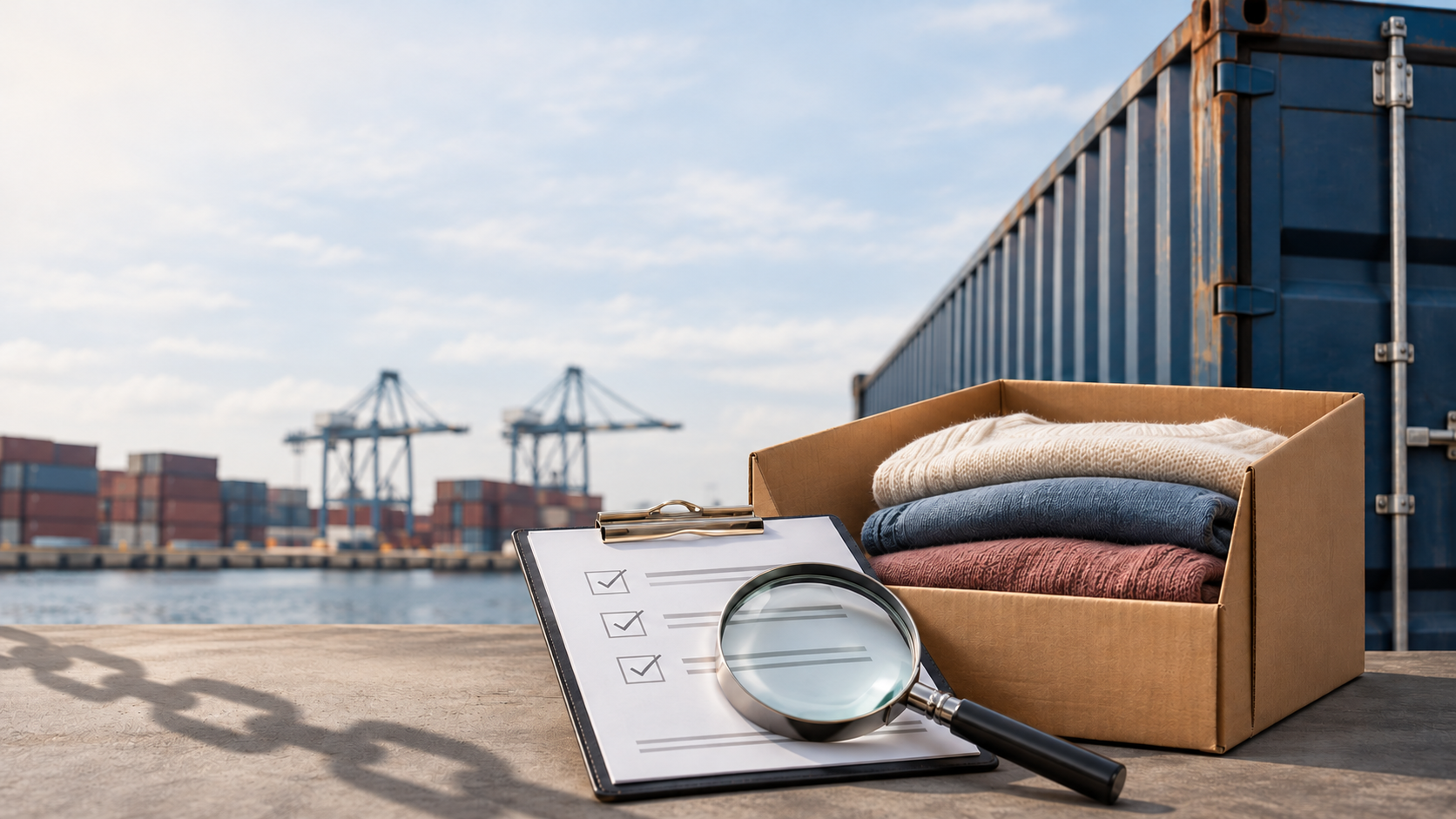
For this reason, preventive review must consider the information available on how the goods were produced, the red flags, and the additional supporting documents that should be requested in order to assess possible forced labor risks.
The legal prohibition and its scope in the supply chain
Decree 1444 of September 28, 2026 prohibits importing goods obtained wholly or partly through forced or compulsory labor, at any stage of the supply chain. The prohibition covers both the finished product and its prior production stages.
For example, when assessing an imported garment, we recommend reviewing the red flags concerning the working conditions used to obtain its fiber or manufacture its fabric, in addition to those corresponding to final assembly. This helps explain why the review must consider information about the manufacturer and the other relevant participants in production.
What is meant by forced labor?
Forced labor occurs when a person is compelled to work through threats or pressure that prevent them from freely deciding whether to perform or continue a job. These practices may include the retention of documents, threats, or the use of debt to prevent a person from leaving the job.
Receiving a salary does not rule out the existence of forced labor. However, not every labor irregularity constitutes this practice: it is necessary to analyze the conditions under which the work is carried out.
Consequences for the importing company
For a company that imports goods produced under these conditions, the consequences may include:
- Retention and loss of the goods: the authorities may seize the goods and, where applicable, order their forfeiture if it is established that they were produced wholly or partly through forced labor.
- Financial penalties: importing these goods may give rise to a fine of 1,000 UVT per transaction. This penalty is not automatic: the corresponding procedure must be carried out, in which the company may exercise its defense and submit evidence.
- Reviews after receiving the goods: controls may be carried out even when the goods have already entered the country and are in the company's possession. Therefore, having received the goods does not eliminate the risk of an investigation or of the measures that may be adopted.
Competent authorities
The Ministry of Labor determines, at the request of the DIAN, whether the reported situations constitute forced labor. The DIAN, in turn, must verify the facts, establish their connection to the imported goods, and decide whether penalties should be imposed or the goods forfeited.
The importance of demonstrating preventive action
In this context, it is essential that the company be able to demonstrate that it acted preventively. This means having evidence of the verifications carried out before importing in order to identify and manage possible forced labor risks in the production of the goods.
These actions may allow the company to be exempted from a penalty, provided it demonstrates that it took timely, effective, and verifiable measures, to the extent required by the applicable regulations. It is not enough to state that it was unaware of the production conditions or that it trusted its supplier. Moreover, a possible exemption from sanctioning liability does not eliminate the prohibition applicable to goods produced through forced labor.
We therefore recommend that the company be able to explain what it verified before importing, what supporting documents it obtained, and how it responded to red flags. As a preventive measure, a supplier's declaration should be cross-checked against additional information where inconsistencies or identified risks exist.
Tools for effective due diligence
Specialized labor advice makes it possible to assess, from a legal and documentary perspective, the forced labor risks associated with the production of the goods the company imports. This analysis includes reviewing the information available on suppliers, manufacturers, and production sites, identifying red flags, and formulating recommendations based on the findings.
To carry out this review, due diligence questionnaires, supplier declarations, and matrices that allow suppliers to be classified according to their level of risk may be used. These tools help identify missing information, define what clarifications to request, and preserve evidence of the verifications carried out.
Support also makes it possible to establish internal policies and procedures for reporting red flags, assigning responsibilities, preserving documents, and monitoring the measures adopted. Their application requires training the people involved in purchasing, foreign trade, and the other areas concerned, so that they recognize risk signals and know how to act.
Is your company prepared to answer these questions?
- Have you identified the actual manufacturer of the goods you import and the production stages for which you need additional information?
- Do you request supporting documents that make it possible to assess the risk of forced labor, beyond general supplier declarations?
- Do you have legal criteria to distinguish a labor irregularity from a possible situation of coercion?
- Do you have a procedure to assess red flags before importing and to define the additional verifications required?
- Can you demonstrate what preventive measures you adopted before the transaction and how you monitored the findings?
- Do you classify your suppliers according to the risks identified and update that assessment when the available information changes?
- Have you defined who receives red flags, who analyzes them, and how decisions are documented?
- Does the personnel involved know the signs of forced labor and the internal procedure for reporting them?
Final recommendations
Answering these questions requires linking the information on the labor conditions of production with the goods the company receives. We recommend preserving supporting documents that make it possible to identify the producer, the scope of the verifications, and the date of the actions.
If a red flag arises after receiving the goods, it is necessary to preserve the available information and obtain a legal assessment of the case, avoiding the assumption that a subsequent certification resolves what occurred.
The next step is to carry out a preventive legal diagnosis that makes it possible to identify risks, information gaps, and priority actions. Based on its results, the company will be able to strengthen supplier assessment, establish internal procedures, and train the areas involved.
Periodic legal support makes it possible to update these tools and guide the response to new suppliers, changes in production conditions, or subsequent red flags.